
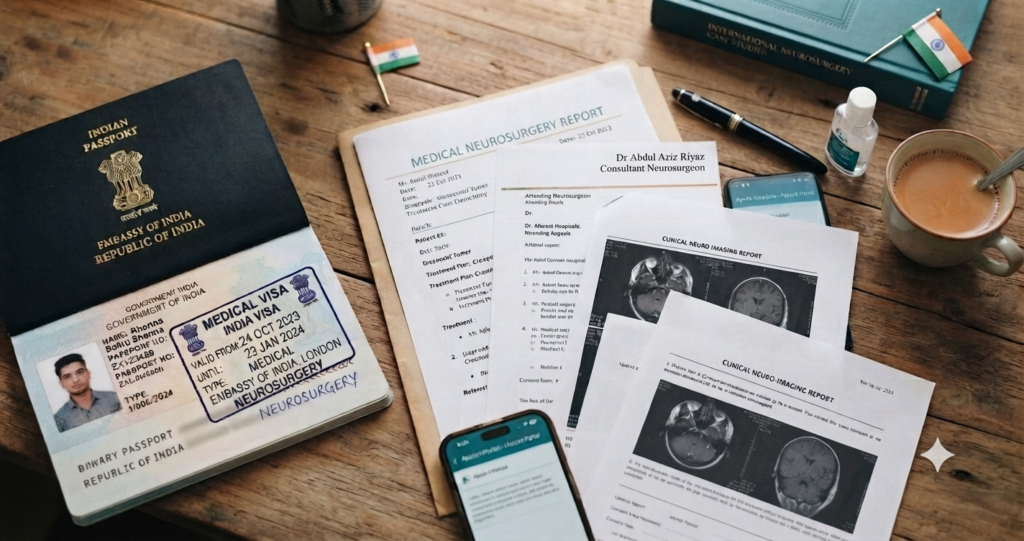
If you are planning to travel to India for brain surgery, spine surgery, endoscopic spine surgery, or another specialized neurological treatment, understanding the visa process is an important part of planning your journey. International patients often have questions about which visa to apply for, what documents are required, whether family members can travel with them, and how long they can stay in India.
This guide explains the India medical visa for treatment process for patients travelling to India for neurosurgery and spine care.
What Is an India Medical Visa for Treatment?
An India Medical Visa, commonly called a Medical Visa or MED Visa, is intended for foreign nationals whose main purpose of travelling to India is medical treatment at an established or recognized hospital or treatment centre. Depending on nationality and eligibility, some patients may also qualify to apply through the e-Medical Visa system.
For patients requiring specialized treatment, this may include:
– Brain surgery
– Neurosurgery
– Spine surgery
– Endoscopic spine surgery
– Minimally invasive spine surgery
– Surgery for slipped or herniated discs
– Treatment for spinal stenosis
– Treatment for brain and spinal tumors
– Treatment for neurological conditions requiring surgery
The correct visa route depends on the patient’s nationality, travel document, length and nature of treatment, and current Indian visa rules. Patients should always verify the latest requirements with the official Indian visa authorities before applying.
Do I Need a Medical Visa to Come to India for Neurosurgery?
If the primary purpose of your visit is planned medical treatment such as neurosurgery or spine surgery, a Medical Visa or eligible e-Medical Visa may be appropriate. The Indian government’s Medical Visa policy is designed for foreign nationals travelling specifically to India for treatment at recognized or specialized healthcare facilities.
Patients should not assume that a tourist visa is automatically suitable for planned surgery. Visa rules can depend on the type of treatment, expected duration of stay, nationality, and the visa already held by the traveller.
If a foreign national is already in India and requires medical care, separate rules may apply. For example, official guidance provides for certain medical treatment without converting the primary visa in specified circumstances, while longer treatment may require further permission or visa conversion.
What Documents Are Required for an India Medical Visa for Treatment?
The exact documents may vary depending on your nationality, the Indian Mission or Visa Application Centre handling your application, and whether you are applying for a regular Medical Visa or an eligible e-Medical Visa.
However, patients commonly need documents such as:
– A completed visa application
– Passport photographs, where required
– Medical records and reports
– A letter or invitation from the Indian hospital or healthcare provider
– Details of the proposed treatment
– The tentative date of admission or treatment
– Supporting financial or travel documents, if requested
– Documents required by the relevant Indian Mission or Visa Application Centre
For an eligible e-Medical Visa application, the official Indian visa website states that applicants must upload the passport bio page and a letter from the concerned hospital in India containing the tentative admission or treatment date. The hospital letter should include relevant patient identification details as required by the application process.
What Should the Hospital Invitation Letter Include?
The hospital invitation or medical treatment letter is one of the most important documents for patients applying for an India medical visa for treatment.
The official e-Visa guidance states that the letter from the Indian hospital should include the tentative date of admission or treatment. Depending on the visa application and the requirements of the relevant Indian authorities, the letter may also identify the patient and provide information about the proposed medical care.
Before applying for a visa, patients travelling for neurosurgery should therefore contact their chosen healthcare provider and request the appropriate medical invitation or treatment letter.
At Neuro Spine Care, international patients can first share their available medical reports for review. These may include MRI scans, CT scans, X-rays, previous consultation notes, discharge summaries, and details of previous treatment. The medical team can then help the patient understand the next steps required before travelling.
Can I Apply Online for an India Medical Visa?
India offers an e-Medical Visa for eligible applicants from eligible countries and territories. The official e-Visa process involves completing an online application, uploading the required documents, paying the applicable fee, and receiving an Electronic Travel Authorization when the application is approved.
However, not every patient or nationality will necessarily use the same visa route. Some travellers may need to apply for a regular Medical Visa through the appropriate Indian Mission or Visa Application Centre.
The regular visa process generally involves completing the online application and then submitting the required documents and passport to the appropriate Indian Visa Application Centre or Indian Mission.
For this reason, international patients should first confirm which application route applies to their nationality and circumstances.
How Early Should I Apply for an e-Medical Visa?
According to the official Indian e-Visa guidance, eligible applicants for an e-Medical Visa can apply at least four days before their intended arrival date, with the permitted application window extending up to 120 days before arrival.
However, patients should avoid waiting until the last minute.
Neurosurgery and endoscopic spine surgery often require advance planning. Medical records may need to be reviewed, additional investigations may be recommended, travel arrangements may need to be coordinated, and the hospital may need to provide a treatment or admission letter.
Applying early can give you more time to correct documentation issues if additional information is requested.
Can a Family Member Travel to India With the Patient?
Yes, family members or attendants may be eligible to accompany a patient under the Medical Attendant Visa category, subject to applicable Indian visa rules.
Under the Ministry of Home Affairs guidance, attendants or family members accompanying a patient may receive a Medical Attendant Visa that is generally linked to the validity of the principal patient’s Medical Visa. The number of attendants permitted can vary according to nationality and applicable regulations.
The official e-Visa guidance also states that no more than two e-Medical Attendant Visas are granted against one e-Medical Visa.
Patients should confirm the current rules before making travel arrangements, especially if more than one family member plans to travel.
How Long Can I Stay in India for Neurosurgery Treatment?
The permitted duration of stay depends on the type of visa issued and the individual circumstances of the patient.
For regular Medical Visas, Ministry of Home Affairs guidance states that the initial validity may be granted for up to one year or the period of treatment, whichever is less, subject to applicable rules. A default option of six months with triple entry may also be granted in certain cases.
Eligible e-Medical Visa rules may be different. The validity and conditions shown on the official Indian e-Visa website should be checked carefully at the time of application because visa categories and eligibility can vary.
The visa granted to you, including its validity and entry conditions, is the document you should follow when planning your stay.
Can a Medical Visa Be Extended if Treatment Takes Longer?
Sometimes recovery or treatment may take longer than expected. According to the Ministry of Home Affairs guidance, a Medical Visa may be eligible for extension through the appropriate FRRO or FRO based on supporting medical documentation from an eligible recognized healthcare institution, subject to the applicable rules.
Patients undergoing major brain surgery or complex spine surgery should discuss the expected treatment and recovery period with their treating doctor. It is important not to overstay a visa and to begin any necessary extension process before the permitted stay expires.
Step-by-Step Process for Getting a Medical Visa to India
Step 1: Obtain a Medical Opinion
Start by collecting your available medical records. For neurosurgery or spine treatment, these may include MRI scans, CT scans, X-rays, neurological reports, consultation notes, and details of previous treatment.
Share these records with your chosen neurosurgeon or healthcare provider in India for an initial review.
Step 2: Understand Your Proposed Treatment
After reviewing the available medical information, the doctor may recommend further evaluation, conservative treatment, surgery, or a procedure such as endoscopic spine surgery, depending on the patient’s condition.
Not every patient with back pain, neck pain, a slipped disc, or a neurological problem requires surgery. A treatment recommendation should be based on an individual medical assessment.
Step 3: Request the Required Hospital Documentation
Once you decide to proceed with treatment in India, request the appropriate hospital invitation or medical treatment letter for your visa application.
Make sure that the information provided in the letter matches your passport and visa application.
Step 4: Check Your Visa Eligibility
Visit the official Indian visa website or contact the relevant Indian Mission or Visa Application Centre to determine whether you should apply for a regular Medical Visa or whether you are eligible for an e-Medical Visa.
Do not rely solely on information from travel agents or unofficial websites.
Step 5: Complete the Visa Application
Complete the application carefully and enter your name, passport number, nationality, and other details exactly as they appear on your official documents.
Upload or submit the required documents in the requested format.
Step 6: Wait for Visa Processing
Visa processing times can vary. Do not book non-refundable travel based solely on an expected approval date unless you understand the financial risks involved.
Follow instructions from the relevant Indian visa authority if additional documents or corrected uploads are requested.
Step 7: Plan Your Medical Travel
After receiving the appropriate travel authorization or visa, coordinate your travel date with the hospital or treating team.
Patients travelling for neurosurgery should also plan for airport transfers, accommodation, an accompanying family member when appropriate, and sufficient time for pre-operative evaluation and post-operative follow-up.
Why Do International Patients Choose India for Neurosurgery and Spine Surgery?
India has become a destination for international patients seeking specialized medical treatment. Patients may consider India because of the availability of experienced specialists, advanced hospitals, different surgical approaches, and potentially lower treatment costs compared with some countries.
For spine conditions, patients may seek opinions regarding procedures such as minimally invasive spine surgery or endoscopic spine surgery. However, the best treatment is not determined simply by choosing the newest technique.
A patient may be suitable for endoscopic spine surgery, conventional spine surgery, minimally invasive surgery, non-surgical treatment, or another approach depending on the diagnosis, location of the problem, symptoms, neurological findings, imaging, and overall health.
Choosing a qualified neurosurgeon and receiving a proper medical evaluation should always come before choosing a specific procedure.
Can I Get a Medical Visa for Endoscopic Spine Surgery in India?
If you are travelling to India specifically for planned endoscopic spine surgery or another medically indicated spine procedure, you may apply through the appropriate medical visa route available to you.
The visa application itself does not guarantee that a particular procedure will be suitable. Your treating specialist will need to review your condition and determine whether endoscopic spine surgery is an appropriate option.
Patients should send their MRI or other relevant imaging and medical reports before travelling whenever possible. This can help the treating team provide initial guidance and prepare the necessary hospital documentation.
What Should I Do Before Travelling to India for Neurosurgery?
Before travelling, make sure you understand:
– Your diagnosis
– The recommended treatment
– The expected duration of treatment
– The approximate recovery period
– The documents required for your visa
– Whether you need an accompanying attendant
– The hospital admission plan
– Your follow-up requirements after surgery
Keep both digital and printed copies of important medical documents. Carry your current medication list and inform your treating doctor about allergies, previous surgeries, and other relevant health information.
Final Thoughts
Getting an India medical visa for treatment is an important step for international patients planning neurosurgery, spine surgery, or endoscopic spine surgery in India. The process usually begins with a medical evaluation and appropriate hospital documentation, followed by the correct visa application based on your nationality and eligibility.
Because visa requirements can change and individual circumstances differ, always verify the latest information through the official Government of India visa portal or the relevant Indian Mission before submitting your application.
If you are considering neurosurgery or endoscopic spine surgery in Bangalore, Neuro Spine Care can help you begin by reviewing your available medical reports and guiding you through the medical treatment planning process before your travel.