
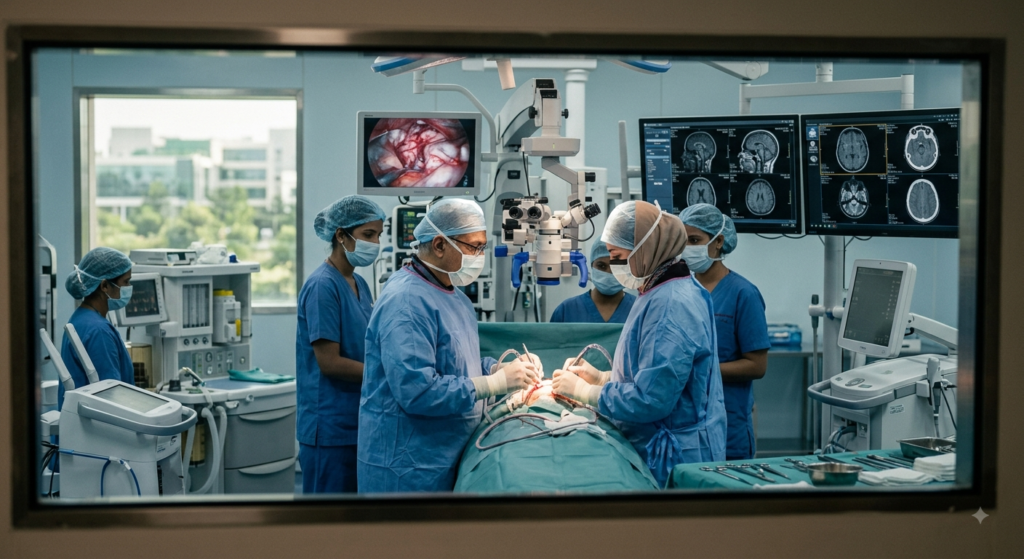
When patients in Iraq need specialised treatment for complex brain or spine conditions, choosing the right neurosurgeon and country for treatment is an important decision. India has become an option for international patients seeking specialised medical care, and Bangalore is one of the cities offering advanced neurosurgical and spine services.
For patients researching neurosurgery in India for Iraqi patients, Bangalore offers access to experienced neurosurgeons, advanced surgical techniques, multidisciplinary hospital facilities and support for international patients.
At NeuroSpineCare, international patients can begin the process remotely by sharing their medical reports and scans before travelling to India.
Why do Iraqi patients consider India for neurosurgery?
Patients may consider treatment outside Iraq when they require a specialised procedure, a second opinion or access to particular surgical techniques. India has established hospitals and specialists providing treatment across different areas of neurosurgery and spine surgery.
The decision to travel should always be based on the patient’s diagnosis, medical requirements and advice from qualified specialists rather than location alone.
For an Iraqi patient, an important advantage of arranging a consultation before travelling is the ability to understand the diagnosis, possible treatment options, expected hospital stay and approximate treatment plan in advance.
Why choose Bangalore for neurosurgery?
Bangalore is a major healthcare destination in India with multispecialty hospitals and specialists experienced in complex neurological and spinal conditions.
Patients seeking a neurosurgeon in Bangalore may find treatment options for conditions including slipped discs, sciatica, spinal stenosis, cervical spine problems, spinal tumours, brain tumours, epilepsy and other neurological disorders.
For suitable patients, Bangalore also offers minimally invasive and endoscopic approaches to certain spine conditions.
What is endoscopic spine surgery?
Endoscopic spine surgery is a minimally invasive technique in which specialised instruments and an endoscope are used to access and treat certain spinal conditions.
Compared with some traditional open procedures, minimally invasive techniques may involve smaller incisions and less disruption to surrounding muscles and tissues. Depending on the procedure and the patient’s condition, this can contribute to reduced postoperative discomfort and recovery.
However, endoscopic spine surgery is not suitable for every patient. The appropriate procedure depends on factors such as the location and severity of nerve compression, spinal instability, previous surgery, imaging findings and the patient’s overall health.
A neurosurgeon should review the patient’s MRI or other relevant imaging before recommending endoscopic surgery.
Which spine conditions can be treated with minimally invasive surgery?
Depending on the diagnosis, minimally invasive or endoscopic techniques may be considered for conditions such as:
Lumbar disc herniation and sciatica
Certain cervical disc problems
Nerve compression
Lumbar canal stenosis
Selected spinal degenerative conditions
Some cases requiring decompression
Selected patients requiring minimally invasive spinal fusion
NeuroSpineCare provides treatment options including interlaminar and transforaminal endoscopic lumbar discectomy, minimally invasive lumbar discectomy, decompression procedures and minimally invasive lumbar fusion.
The recommended treatment is determined after evaluating the patient’s symptoms, neurological examination and imaging.
Can Iraqi patients consult a neurosurgeon before travelling to India?
Yes. An online consultation can be arranged before travelling.
International patients can share their MRI scans, CT scans, previous medical reports, prescriptions and other relevant information for review. The neurosurgeon can then discuss the diagnosis and possible treatment options during an online consultation.
This can help patients and their families understand whether surgery may be necessary and whether travelling to Bangalore is appropriate.
A remote consultation cannot always replace a physical examination. If surgery is planned, the patient will undergo appropriate assessment after arriving in India.
What neurosurgical conditions can be treated in Bangalore?
Neurosurgery covers a wide range of conditions affecting the brain, spine, spinal cord and nerves.
Depending on the specialist and hospital, treatment may include:
Brain tumours
Spinal tumours
Herniated discs and sciatica
Cervical spondylosis
Spinal stenosis
Spinal cord disorders
Epilepsy
Trigeminal neuralgia
Head and spine injuries
Complex spinal conditions
Selected paediatric neurosurgical conditions
Certain vascular and functional neurological conditions
NeuroSpineCare offers brain and spine consultations as well as procedures including endoscopic brain and spine surgery, minimally invasive spine surgery, microsurgery and complex spine surgery.
Why is choosing the right neurosurgeon important?
The choice of surgeon is one of the most important decisions when travelling internationally for neurosurgery.
Patients should consider the surgeon’s qualifications, experience with the specific condition, surgical expertise and the hospital where the procedure will be performed.
Dr. Abdul Aziz Riyaz is a Consultant Neurosurgeon and Spine Surgeon in Bangalore. His areas of expertise include minimally invasive spine surgery, endoscopic spine procedures, complex brain and spine surgery, brain tumour treatment and paediatric neurosurgery.
According to his NeuroSpineCare profile, he has performed more than 2,500 surgeries across brain and spine conditions.
Patients should also ask whether surgery is actually necessary, what alternatives are available, the expected recovery period and the possible risks and complications.
How does treatment work for an Iraqi patient travelling to Bangalore?
The international patient journey can begin before the patient leaves Iraq.
Step 1: Share medical records
The patient can provide MRI scans, CT scans, previous medical reports and relevant treatment history.
Step 2: Specialist review
The medical information is reviewed to understand the patient’s condition and possible treatment options.
Step 3: Online consultation
The patient and family can discuss the diagnosis, treatment options and questions with the neurosurgeon through a virtual consultation.
Step 4: Treatment planning
If surgery appears appropriate, the patient can receive information about the proposed procedure, expected duration of treatment and estimated costs.
Step 5: Travel to Bangalore
Once the patient is comfortable proceeding, arrangements can be made for travel and hospital admission.
Step 6: Surgery and recovery
When surgery is required, the procedure is performed at the appropriate hospital with postoperative monitoring and rehabilitation as needed.
Step 7: Follow-up
After returning to Iraq, patients can continue follow-up through virtual consultations when appropriate.
How long does an Iraqi patient need to stay in India?
The duration depends on the diagnosis and procedure.
A straightforward procedure may require considerably less time than complex brain or spine surgery. Hospital stay, postoperative observation, rehabilitation and travel requirements should all be considered when planning the trip.
Patients should obtain an individualised estimate from their treating team rather than relying on a fixed number of days.
Can patients from Iraq get a second opinion in India?
Yes. Seeking a second opinion can be particularly useful before major neurosurgery.
An Iraqi patient who has already received a recommendation for surgery can share their scans and reports with a neurosurgeon in Bangalore for another professional opinion.
The purpose of a second opinion is not necessarily to avoid surgery. It can help patients understand whether surgery is required, which procedure may be appropriate and whether non-surgical treatment could be considered.
What should Iraqi patients carry when travelling for neurosurgery?
Patients should keep their medical documents organised before travelling. These may include:
Recent MRI and CT scans
Previous medical reports
Discharge summaries
Current prescriptions
Previous surgical records
Blood investigation reports
Identification and travel documents
Relevant medical correspondence
Digital copies should also be kept securely so that they can be accessed when needed.
Why choose NeuroSpineCare for neurosurgery in Bangalore?
NeuroSpineCare provides consultation and treatment planning for patients seeking specialised brain and spine care in Bangalore.
For international patients, the process can begin with online medical-record review and consultation before travelling to India. The team provides assistance with treatment planning, estimated costs, hospital coordination, accommodation recommendations and postoperative follow-up.
The goal is to help patients make an informed decision about treatment rather than encouraging surgery when it is not medically indicated.
Frequently Asked Questions
Is India a good option for Iraqi patients needing neurosurgery?
India offers specialised neurosurgical and spine treatment through experienced specialists and multispecialty hospitals. Whether India is the right choice depends on the patient’s individual diagnosis and treatment requirements.
Is endoscopic spine surgery available in Bangalore?
Yes. Endoscopic and minimally invasive spine procedures are available in Bangalore for appropriately selected patients. The recommended technique depends on the patient’s MRI findings and clinical condition.
Can I send my MRI from Iraq before travelling?
Yes. Patients can share MRI scans, CT scans and medical records for an initial review and online consultation.
Can I get a neurosurgical second opinion in Bangalore?
Yes. Patients from Iraq can seek an online second opinion before travelling, particularly when considering major brain or spine surgery.
Can I continue follow-up after returning to Iraq?
Yes. Virtual follow-up may be possible after treatment, depending on the procedure and the patient’s recovery.
How can I start my treatment journey from Iraq?
You can begin by sharing your medical reports and scans with NeuroSpineCare. After reviewing the information, an online consultation can help determine the next appropriate step.
Looking for Neurosurgery in India for Iraqi Patients?
If you are in Iraq and looking for neurosurgery in India for Iraqi patients, you can begin your treatment journey from home.
Share your MRI, CT scans and medical reports with NeuroSpineCare for an initial evaluation and discuss your condition with a neurosurgeon in Bangalore before making travel arrangements.
NeuroSpineCare – Bangalore
Consultant Neurosurgeon & Spine Surgeon: Dr. Abdul Aziz Riyaz
International patients can request an online consultation and receive guidance regarding evaluation, treatment planning and the next steps.